
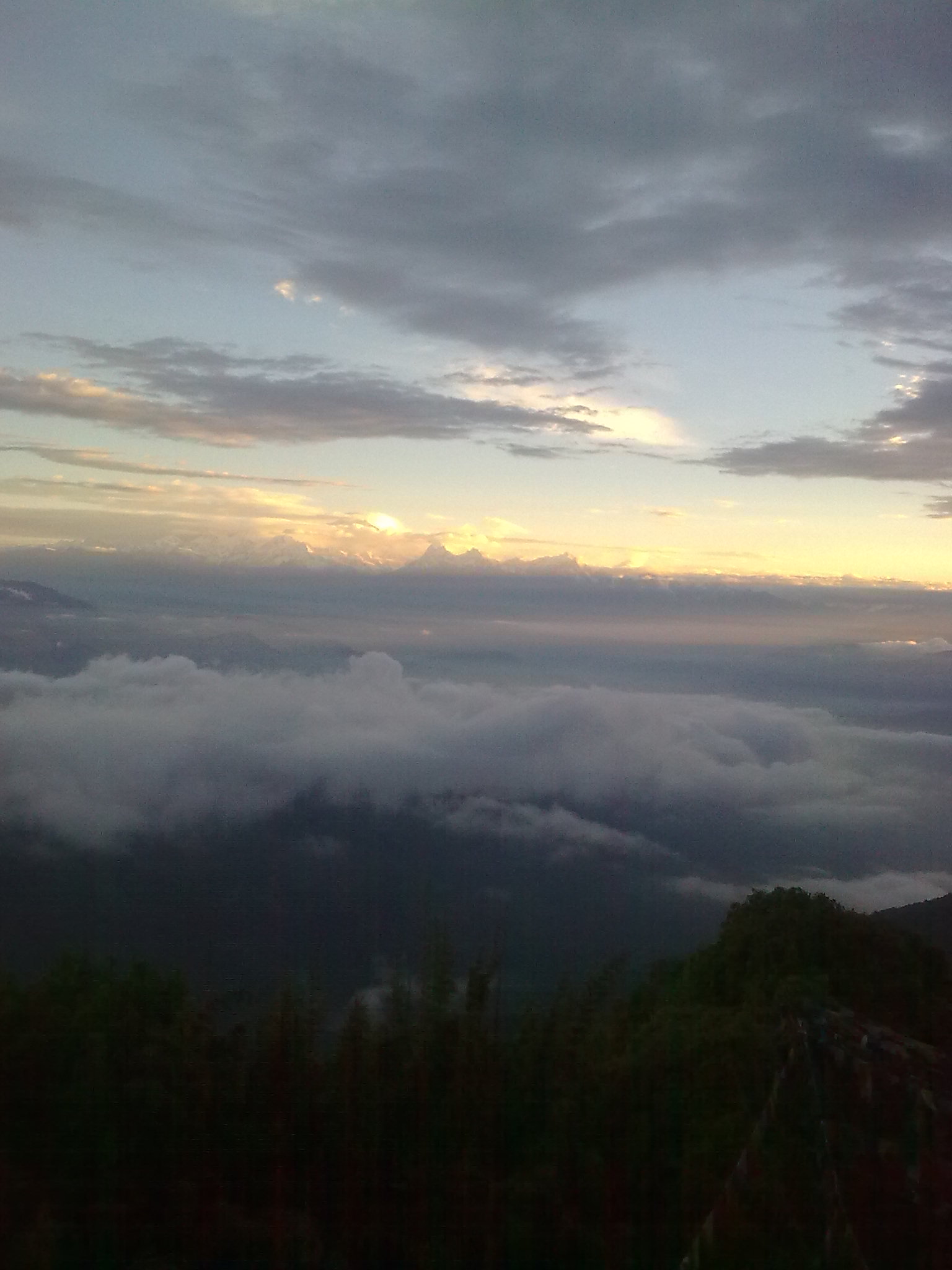
During the monsoon, a sunrise trip to Tiger Hill is a gamble against the cloud. From roughly June to September Darjeeling receives heavy rain and frequent mist, and the odds of seeing Kanchenjunga at dawn are at their lowest of the year. That does not make the place pointless — but you should go in knowing what to expect.
What the monsoon changes
The monsoon transforms the weather rather than the geography. The hill is still there, the range is still there, but a thick, wet atmosphere sits between you and the view. Expect:
- Heavy rain, sometimes for days at a time.
- Mist and low cloud, which can reduce visibility to almost nothing.
- A greener, wetter landscape — this is also the season when the hills are at their most lush.
The practical consequence is simple: a clear sunrise in the monsoon is the exception, not the rule.
The odds of a view
Of all the seasons, this is the one where a sighting of Kanchenjunga is least likely. Cloud and mist frequently hide the range entirely, and a general forecast that looks passable rarely translates into a genuinely clear line of sight at dawn. The sunrise weather guide explains why forecasts so often overpromise here.
If seeing the peaks is your main goal, the best time to visit guide points to the clearer months instead. If your dates are fixed to the monsoon, treat any view as a bonus.
If you go anyway
Going in the monsoon is a legitimate choice as long as you are honest about it:
- Set low expectations. Do not plan the trip around a guaranteed view.
- Be flexible. If the morning is solid rain, it is reasonable to skip the sunrise and use the time differently.
- Watch for breaks. Occasionally the cloud thins around dawn, and a short window opens.
Rain, safety and the road
We cannot certify road conditions for your date, and mountain roads in heavy rain need care. Practical precautions:
- Leave the driving to a local driver rather than self-driving unfamiliar roads in the wet and dark.
- Allow extra time, since wet roads are slow.
- Take rain protection for yourself and your belongings.
- Mind slippery ground at the viewpoint.
The visitor safety guide has broader advice for travelling in the hills.
Better alternatives on a wet morning
When the sunrise is clearly clouded out, the smarter move is often to redirect the morning. Rather than waiting in the rain at a viewpoint with no view, consider indoor or lower-altitude options closer to town. The cloudy day alternatives guide lists ways to salvage a wet morning.
What the hills look like in the monsoon
The monsoon does not only mean grey skies. It is also the season when the Darjeeling hills are at their greenest, with waterfalls running, rivers full and the tea slopes vivid. If you adjust your expectations from “mountain panorama” to “lush wet hills”, the season has its own appeal.
The catch is that the same moisture that greens the landscape is what hides the peaks. You are trading the chance of a clear sunrise for a richer, wetter countryside — a fair deal only if you know you are making it.
Planning a monsoon trip realistically
If your dates fall in the monsoon, build the trip around wet-weather possibilities rather than a single hoped-for sunrise:
- Do not build the whole day around Tiger Hill. Keep the morning flexible.
- Have indoor and lower-altitude options ready. See the cloudy day alternatives guide.
- Pack for rain as a matter of course, not as a backup.
- Talk to your hotel about realistic plans for the season.
Treat any dawn clear spell as a gift. On that basis, a monsoon trip can still be enjoyable, even if the range stays hidden.
When the monsoon ends
The monsoon generally eases toward the end of the season, with cleaner, drier conditions returning in the cooler months. The exact timing shifts from year to year, so it is worth checking the current seasonal outlook rather than assuming a fixed date. Once the air clears, the cooler months become the season of choice for a serious sunrise attempt.