
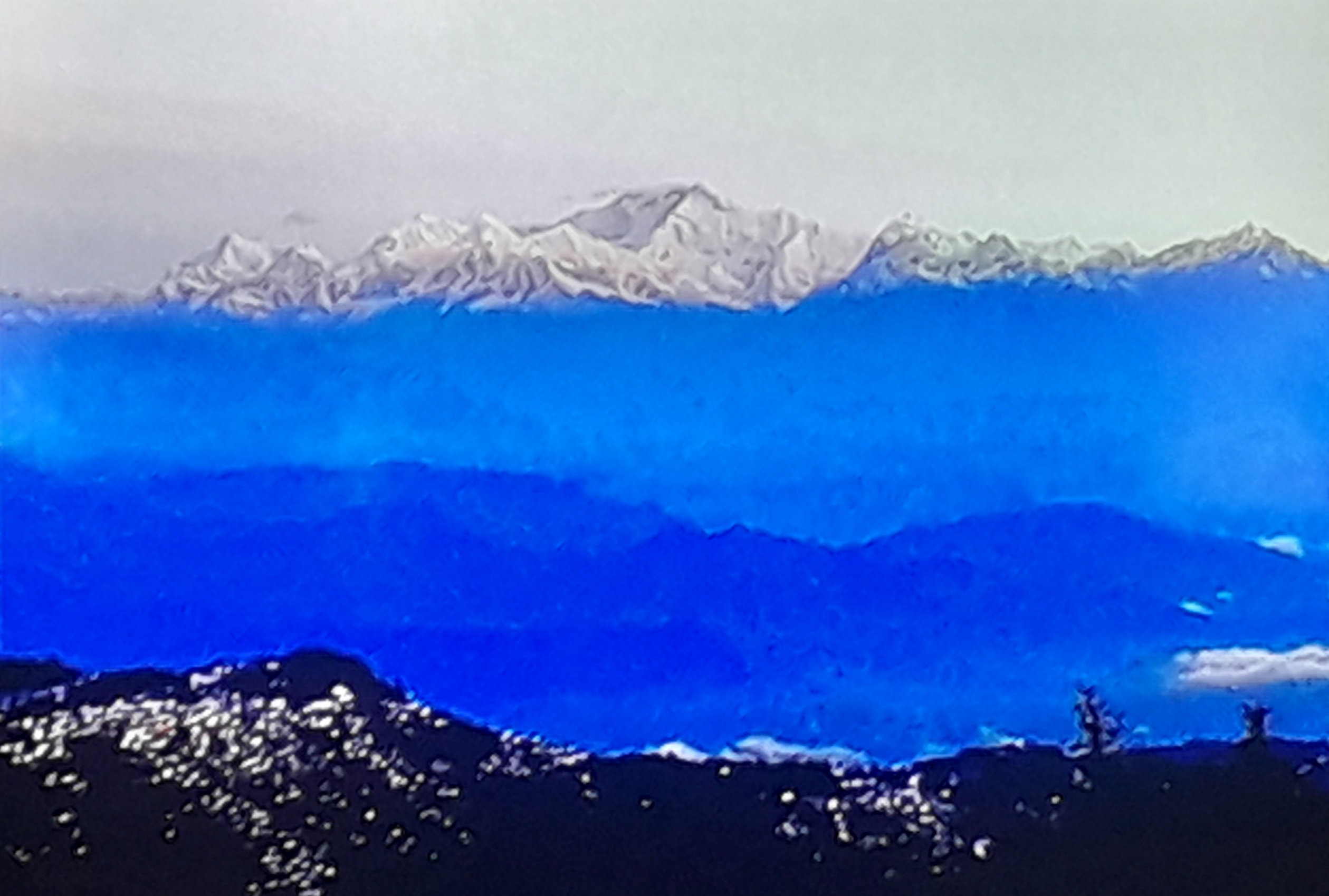
On a clear morning at Tiger Hill you can watch first light reach the Kanchenjunga range. On a cloudy or foggy one you may see nothing but white. This page explains what actually decides visibility at Darjeeling’s sunrise viewpoint, and how to read a forecast without trusting it too far.
What decides what you see
The range does not disappear because it is “not there” — it disappears because something is between you and it. Three things do most of the work.
Cloud
High and mid-level cloud across the horizon can shut off the light before it ever reaches the peaks. Unlike fog sitting in the valley, cloud can also hide the mountains from above, leaving you with a grey ceiling and no view at all.
Valley fog
The valleys below the viewpoint often fill with fog or low cloud overnight. When this happens, the peaks may poke above a sea of white — sometimes spectacular — or the whole range can be swallowed. Whether the fog sits low or rises to your level changes minute to minute.
Haze and dust
Haze does not block the range so much as wash it out. On hazier mornings the mountains appear as a faint, flat band rather than crisp snow peaks. This is more common in the warmer, pre-monsoon months.
Reading a forecast honestly
A weather forecast is useful for judging broad conditions, not for promising what you will see at your hour. Keep three things in mind:
- The forecast is for a general area, not the exact viewpoint at the exact minute of sunrise.
- “Clear” can still mean a clear sky over a valley full of fog.
- Conditions change quickly; a morning that starts dull can open up, and one that starts clear can close in.
Use the forecast to decide how likely a view is, then watch the sky rather than the app once you are there.
Town weather and hill weather are not the same
Tiger Hill sits higher than Darjeeling town. It can be above low cloud that the town does not show, or inside mist that the town has not yet caught. If you step outside your hotel and the sky looks doubtful, that tells you something, but it does not settle what is happening up on Senchal Road.
What the seasons do to the odds
The best odds generally come in the cooler, clearer months, while the monsoon gives the poorest odds. The best time to visit guide breaks this down season by season, and the monsoon guide covers the wettest stretch in detail.
What to do when it is cloudy
Have a plan B before you commit. If the morning is clouded in:
- Wait a while before giving up — cloud sometimes breaks around or just after sunrise.
- Do not stand indefinitely in the cold; agree with your driver how long you will wait.
- Fall back on a wet-weather option closer to town. The cloudy day alternatives guide lists ideas.
A simple way to judge the morning
You do not need a meteorology degree to make a sensible call. A few quick checks help:
- Look at the air, not just the clouds. Sharp, clean air favours a view; a flat, hazy band over the hills is a warning sign.
- Watch the valleys. If low fog is already sitting in them when you set off, it may or may not lift to the viewpoint.
- Give it a window. Rather than judging at one instant, watch across the sunrise period; conditions can open and close within minutes.
Why two mornings can look completely different
It is common for a cloudy morning to be followed by a clear one, or the reverse, with no obvious change in the general forecast. That volatility is the nature of hill weather. It is also why a single disappointing dawn is not proof that the season is bad, and why building in a spare morning is worthwhile if you can. The best time to visit guide explains how to think about that flexibility.
The one thing to remember
No page — this one included — can promise the mountains will be visible. The view at Tiger Hill is weather-dependent, and the honest expectation is a chance, not a certainty. Come for the morning out and the possibility of the view, and you will not be disappointed when the clouds win.