
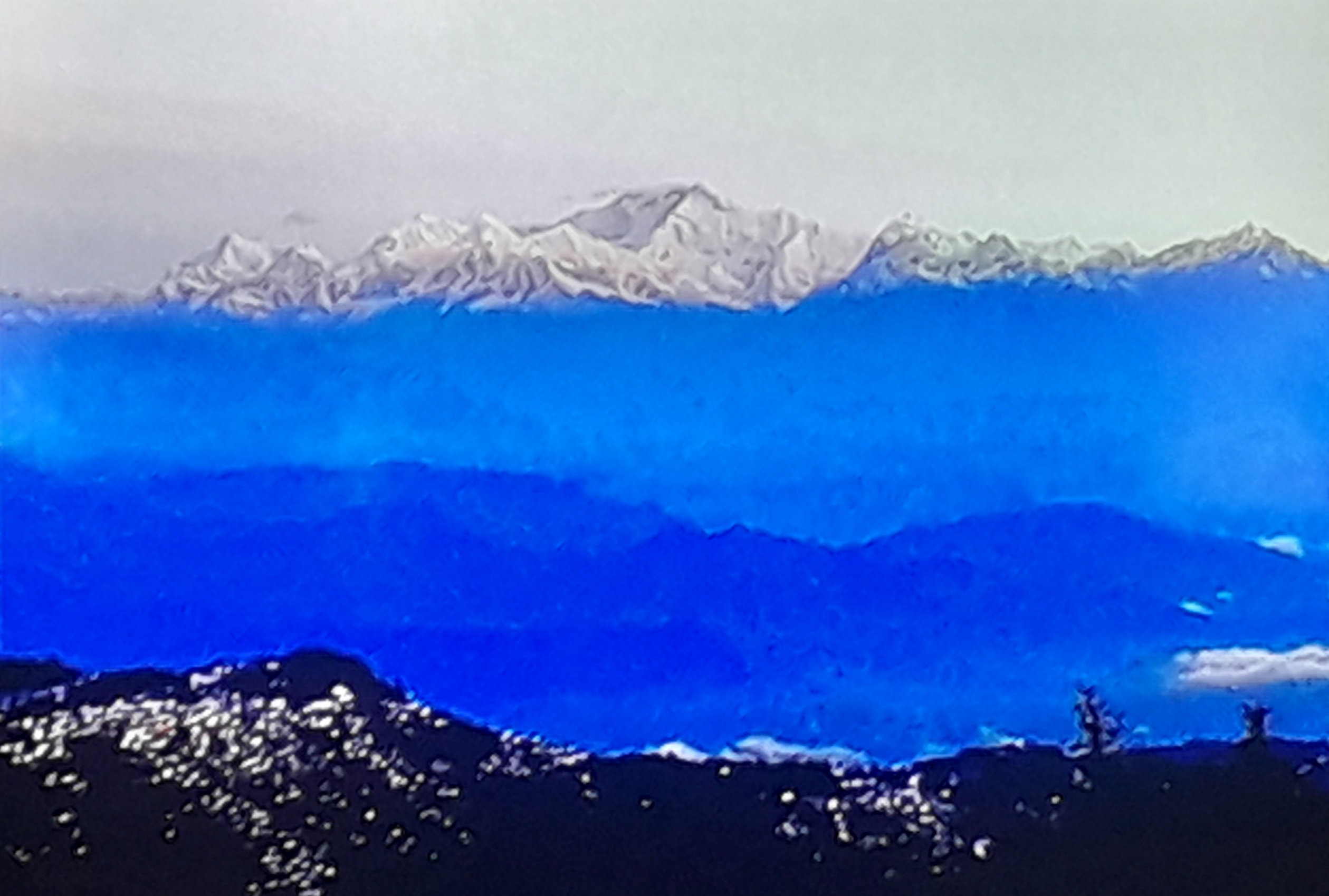
Everest can, on a genuinely clear morning, be seen from Tiger Hill as a small, distant peak far to the northwest. It is not the mountain that fills the view — Kanchenjunga is — and many visitors never spot Everest at all, even when the sky looks clear. This page explains why, and how to know what to look for.
Is Everest really visible from Tiger Hill?
Yes, but conditionally. Official tourism sources describe Everest as visible from Tiger Hill in especially clear conditions. That is a real, documented possibility — not a marketing invention — but it is the second, far more difficult sighting after Kanchenjunga.
The distinction matters. Kanchenjunga is the massif that dominates the northern view and the reason most people come. Everest is a distant detail on the far horizon. If you arrive expecting Everest to be the headline, you will likely be disappointed; if you come for Kanchenjunga and happen to catch Everest, you will be delighted.
Why Everest is hard to spot
Several things work against you:
- Distance. Everest is far away, so it appears small and low on the horizon from this angle.
- The nearer ranges. Kanchenjunga and the surrounding peaks draw the eye and can partly obscure the sightline.
- Atmosphere. Haze and moisture flatten distant peaks into faint shapes, and cloud can blot them out completely.
The result is that even on a morning that feels clear, Everest may be invisible while Kanchenjunga is sharp.
What you are looking for
Do not expect a towering pyramid. Look instead for a small snow peak standing on the far horizon to the northwest, well beyond the closer ranges. It is the kind of thing you can look straight past if you do not know where to search, which is why local guides and experienced visitors often know exactly where to point.
The viewpoints guide covers where to stand, and the sunrise photography guide covers how to frame and zoom for distant peaks.
Conditions that help
The best odds come with genuinely clear, cold air — the kind more common in the cooler months — and with patience around first light. Even then, the sunrise weather guide makes clear that no forecast can promise a distant Everest. The deciding factor is a truly clear line of sight, which you cannot book.
Kanchenjunga and Everest side by side
It helps to know how the two compare from Tiger Hill, because that shapes what you should look for and what you should expect.
- Kanchenjunga is the near star: a vast massif that fills the northern view and catches first light reliably on a clear morning.
- Everest is the far detail: a small shape on the distant horizon, easily lost in haze and often mistaken for the nearer peaks.
If you can tell them apart, you will know within seconds whether Everest is available on your morning, rather than spending the whole sunrise looking in the wrong place.
Where exactly to look
Look to the northwest, beyond the nearer ranges, and scan the far horizon slowly rather than fixing on one point. Everest will not announce itself; it appears as a modest snow peak among others. A local guide or a driver who knows the view can save you a lot of squinting by pointing to the right patch of horizon on the day.
A realistic plan
Plan the morning around what is dependable:
- Watch Kanchenjunga take the first light — the main event.
- Ask someone local to indicate Everest’s position.
- If it is visible, enjoy it; if not, accept it and move on.
That way a rare Everest sighting enhances an already good morning instead of becoming the only measure of success.
Managing expectations
Treat Everest as a bonus:
- Come for Kanchenjunga, which is the reliable star of a clear morning.
- Ask your driver or a local guide to point out Everest if it is visible.
- Accept that many visits do not produce a sighting, and that this is normal rather than a failure.
The one honest takeaway
Everest from Tiger Hill is real but rare, and entirely at the mercy of the weather. Plan the trip around the experience of the sunrise and the chance of Kanchenjunga. If Everest appears too, you have had an exceptional morning.